Comparison of the mottled shieldbug and the brown marmorated stink bug
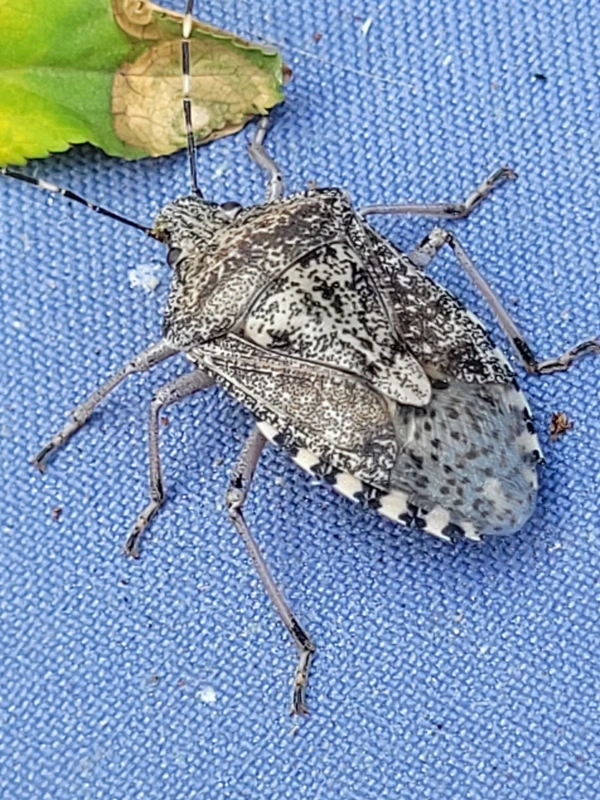
This article was created to help distinguish between the Brown marmorated stink bug - Halyomorpha halys and the mottled shieldbug - Rhaphigaster nebulosa.
The izeltlabuak.hu website primarily focuses on arthropods found in Hungary. This entry also deals with Hungarian fauna.
Both species belong to the Pentatomidae family of the true bugs suborder. The mottled shieldbug is common everywhere in Hungary, and was already mentioned in the 1897 publication "The Animal World of the Hungarian Empire" by the world-famous bug researcher Géza Horváth 1. The first specimens of the brown marmorated stink bug from Hungary were first discovered in the autumn of 2013 2, which was published in Hungarian by Veronika Papp and her colleagues 3, and later Gábor Vétek published an article about it 4.
Since then, the marmorated stink bug has spread rapidly in Hungary, occurring everywhere in Budapest, but it can also be found in settlements around Budapest and in larger cities. Its known distribution in Hungary is shown on the species page map. We welcome all data for observing its spread.
Both species are characterized by appearing in homes in autumn. They look for suitable places where they can overwinter. They are not harmful, we don't need to be afraid of them. The easiest way to prevent them from entering the home is with mosquito nets, it's pointless to try with insecticides, they won't work. Many people complain about their smell. These animals have scent glands from which they release a smelly secretion when they feel threatened. We smell the same way if we step on them, so that's not the best solution either. If we find one in the home, we can put a glass over it, slide paper underneath to close it, then release it outdoors. With a little practice, this operation can be done by hand, if we don't disturb it, it won't release smell. Not only these two species tend to appear in homes, we can also encounter green shield bugs, but the southern green shield bug may also appear, which is also an alien species, its first specimen was found in Hungary in 2001. In addition to the above, there are other shield bugs that may be similar.
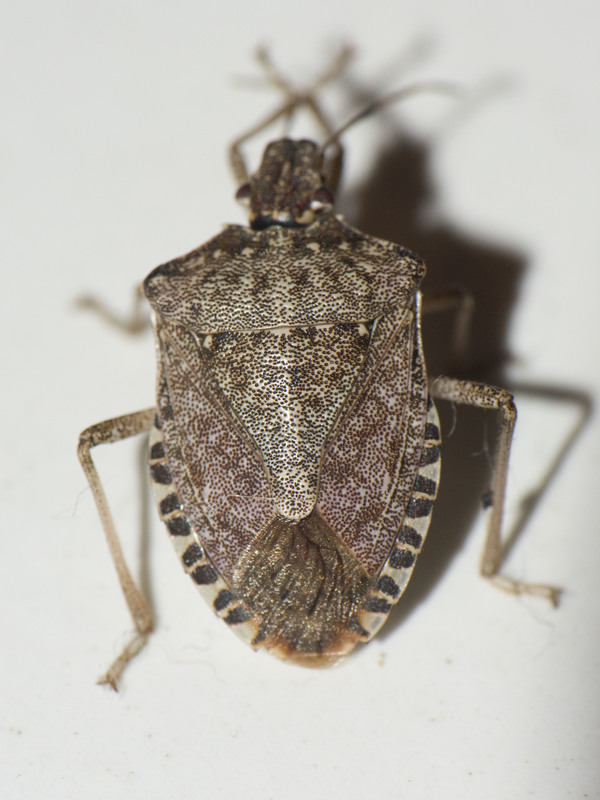
Halyomorpha halys - ázsiai márványospoloska

On the left is the brown marmorated stink bug, on the right is the mottled shieldbug.
They are roughly the same size, but their shape is different. The mottled shieldbug is more elongated, while the brown marmorated stink bug is more compact.
- The mottled shieldbug has brownish spots on its membrane, the brown marmorated stink bug does not have such spots. The membrane is the transparent surface at the end of the bug's wing (hemelytron).
- The brown marmorated stink bug usually has a purplish tint on its hemelytra. The mottled shieldbug does not have this.
- The shape and pattern of the scutellum differs.
- The shape of the black parts of the abdomen edge (connexivum) is different. For me, the marmorated stink bug reminds me of a coffee bean shape.

brown marmorated stink bug ventral side
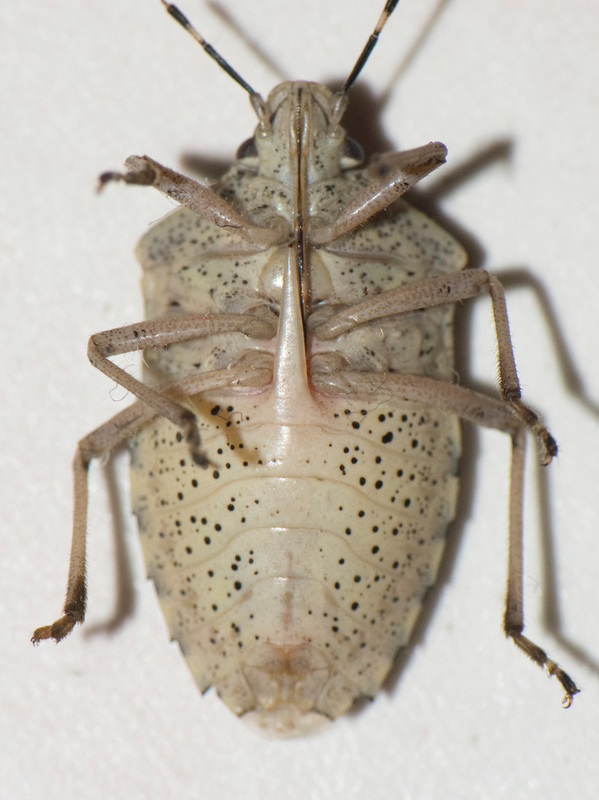
There are also clearly visible differences on the ventral side.
On the left is the ventral side of the brown marmorated stink bug, on the right is that of the mottled shieldbug.
- In the mottled shieldbug, a clearly visible spine-like structure can be seen on the ventral side between the legs. This is true for most members of the Pentatomini and Piezodorini tribes, although in some species it is shorter or completely absent. The marmorated stink bug does not have this, it is a member of the Cappaeini tribe.
- The mottled shieldbug has black spots on its ventral side. The brown marmorated stink bug does not have these.
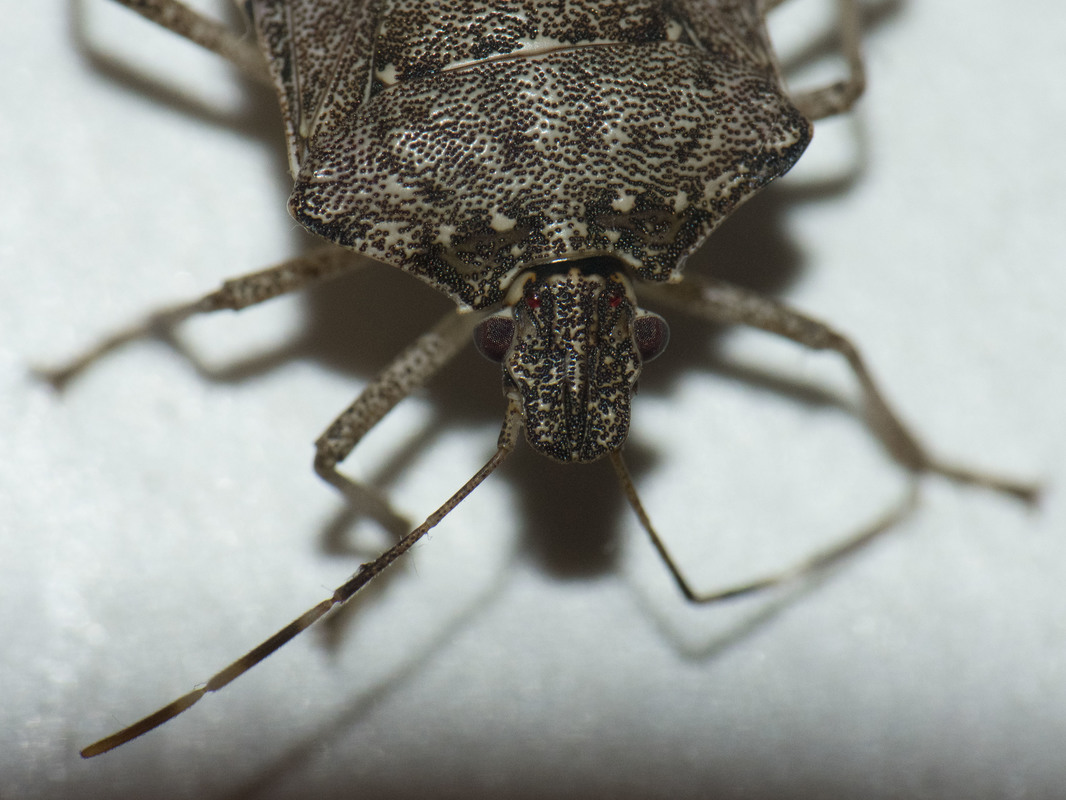
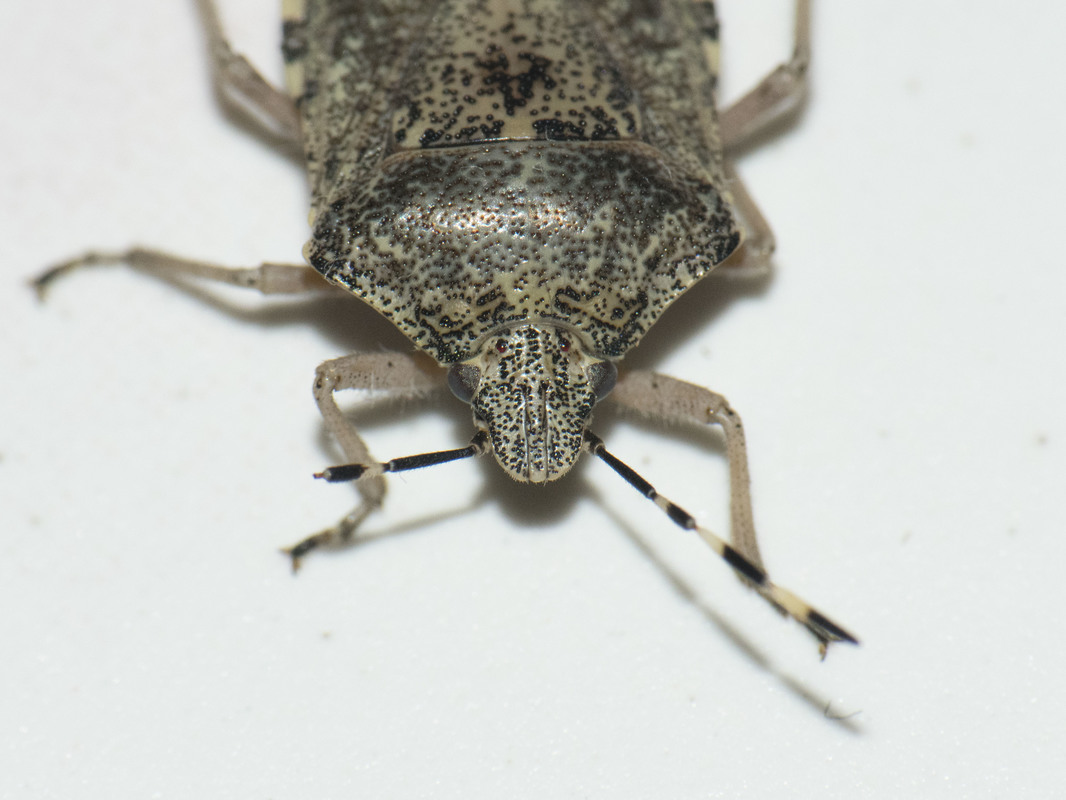
On the left is the antenna of the brown marmorated stink bug, on the right is that of the mottled shieldbug.