First record of the samurai wasp - Trissolcus japonicus in Hungary
A recent publication reports on the first record of Trissolcus japonicus (samurai wasp) in Hungary.

The izeltlabuak.hu website primarily focuses on arthropods found in Hungary. This entry also deals with Hungarian fauna.
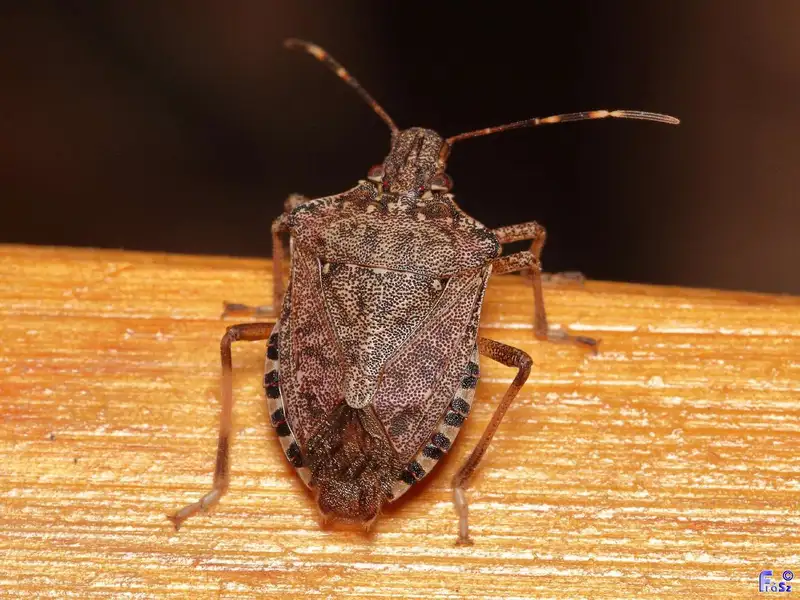
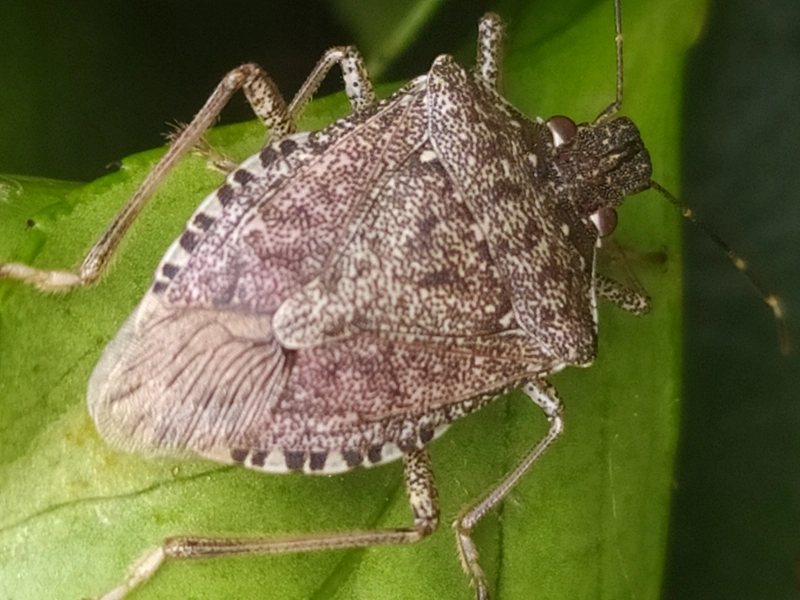
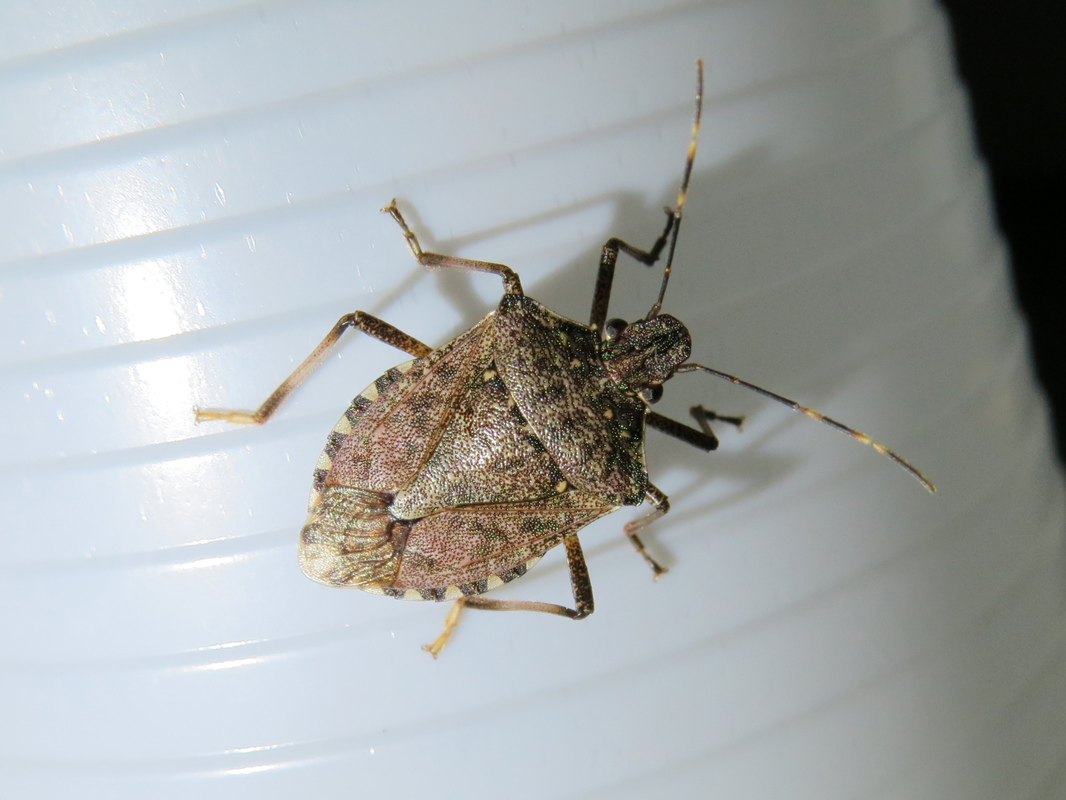
The brown marmorated stink bug
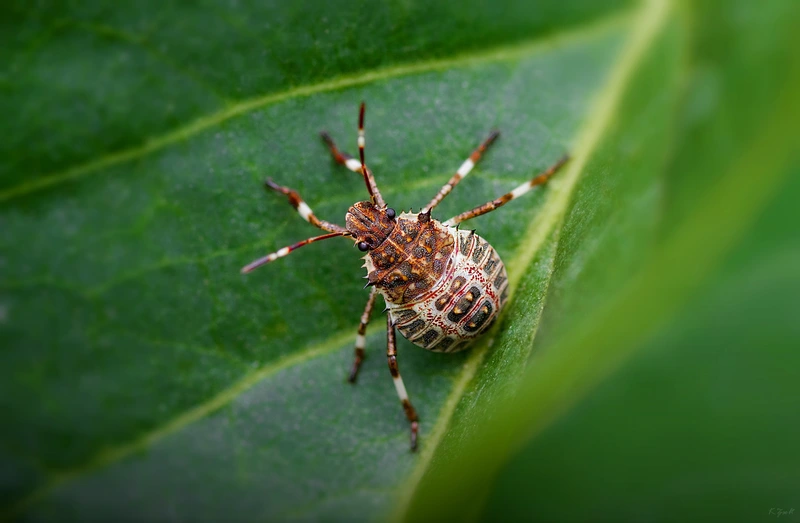
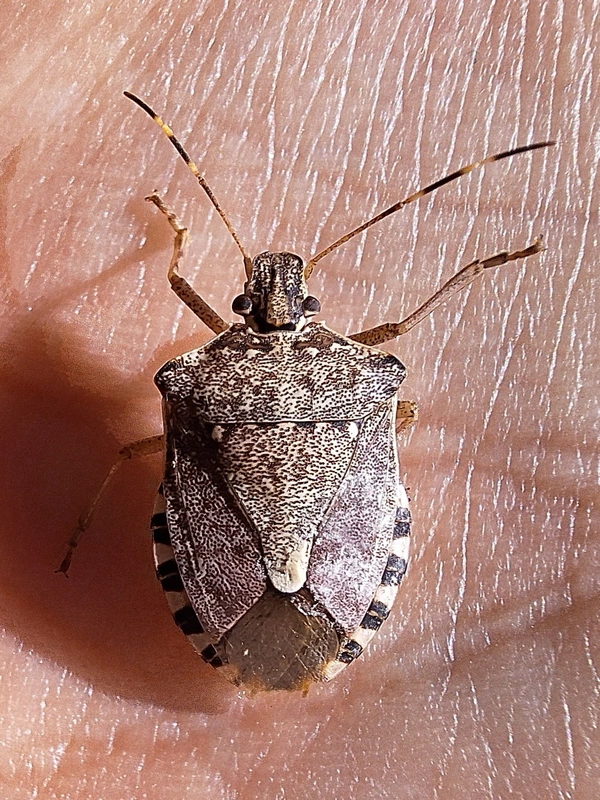
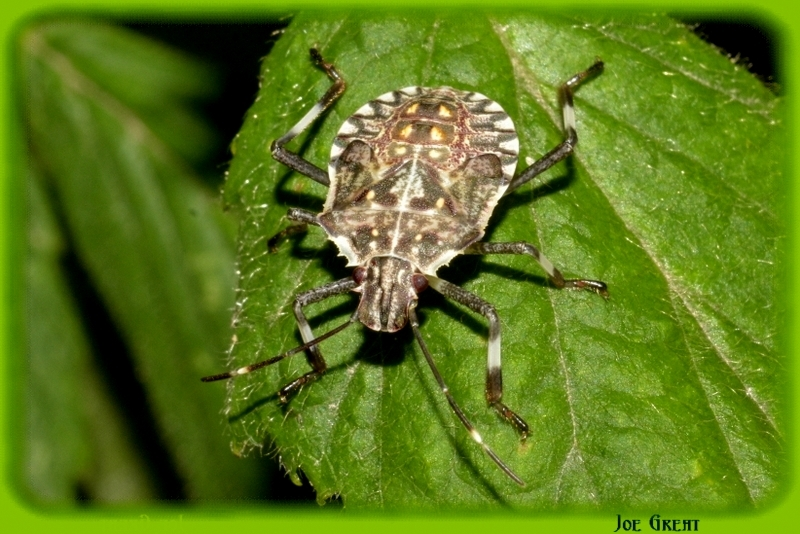
We are all familiar with the brown marmorated stink bug - Halyomorpha halys. The first specimens from Hungary were discovered in autumn 2013, which was published in Hungarian by Papp Veronika and colleagues, and later Vétek Gábor published an article about it.
Since then, the brown marmorated stink bug has spread throughout Hungary. Due to its mass overwintering individuals, it has become a serious nuisance for residents, entering our homes in winter and causing discomfort with their presence. You can read more about bugs in homes here.
It is considered an agricultural pest, as the bug's feeding on vegetables, fruits, peppers, tomatoes, apples, pears, grapes, etc. causes damage during fruit development.
The brown marmorated stink bug was able to spread so rapidly in Hungary because it lacks sufficiently effective natural enemies that would suppress it. Although spiders and birds also feed on it, they are not effective enough.
The samurai wasp
For years, there has been news in the media about a parasitoid wasp called the samurai wasp that can effectively control the brown marmorated stink bug. The wasp lays its eggs inside the bug's eggs. Here it consumes the developing bugs, so the bug's offspring do not hatch, and instead new parasitoid wasps develop.
In other countries, the brown marmorated stink bug is one of the most effective natural biological controls, but until now its occurrence in Hungary had not been confirmed.
A new publication reports on the first confirmed occurrence data of the samurai wasp in Hungary.
The study examined the species that parasitize the brown marmorated stink bug eggs in Hungary, as well as in several cities in Southeast Europe. In addition to native species, Trissolcus japonicus was first detected in Hungary, while Trissolcus mitsukurii was not found in Hungary, but was first identified in Oradea (Nagyvárad).
Conclusions
The species that most frequently parasitized the brown marmorated stink bug eggs were native parasitoid wasps, primarily Anastatus bifasciatus. Among the Trissolcus species, there are also many native Hungarian species. Trissolcus japonicus is not native and should be considered an invasive species.
The native parasitoid wasps are not able to cause sufficient mortality to have a significant impact on the population. Thus, the brown marmorated stink bug will remain a significant agricultural pest in Hungary in the short and medium term.
The publication emphasizes that the appearance of the samurai wasp does not promise a quick solution. The parasitization rate is still low, and a rapid population collapse is not expected. In the fight against the brown marmorated stink bug, an integrated pest management approach is still needed, including monitoring, targeted control, and support for biological control.
In memory of Gábor Vétek
The publication pays tribute to Vétek Gábor, whom the article authors consider a co-author of the publication. Gábor was a plant protection specialist, a recognized researcher of the brown marmorated stink bug, who died of coronavirus in 2020 at the age of 40.
Source
The following are the author's own comments, not from the publication.
Survey and identification of the samurai wasp in Hungary
To study the distribution of the samurai wasp in Hungary, a survey of observed wasps would be necessary. This is complicated by the fact that egg parasitoid wasps are extremely small and require specialized expertise for identification. To my knowledge, there is currently no expert in Hungary who can identify these wasps.
They may also parasitize other bugs
The appearance of the samurai wasp, as with any non-native species, may have unpredictable effects on native bug species. We cannot know how the appearance of the new species will change the local ecosystem.
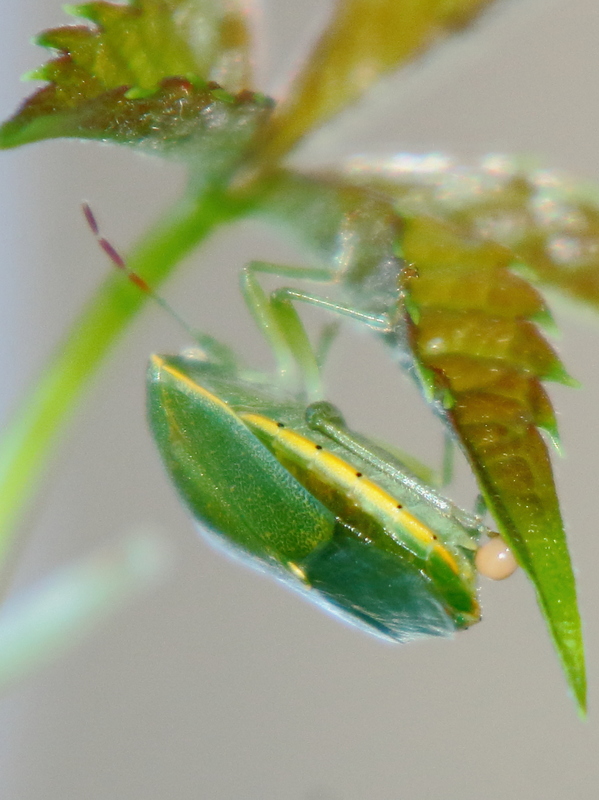
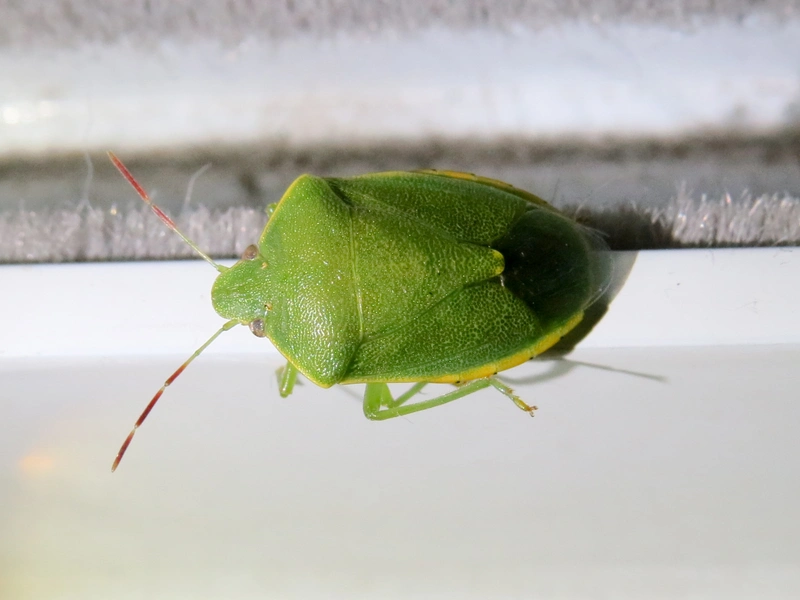
As an example, I would like to mention the following case: Tóth Virág reported to me that she reared wasps from Acrosternum heegeri bug eggs. She recorded the egg-laying on izeltlabuak.hu. After they hatched, she personally handed the wasps over to me. I tried to have them identified, but could not find a specialist who could identify them. Acrosternum heegeri is also a non-native species, first recorded in Hungary in 2016. Since then, like the brown marmorated stink bug, it has also spread throughout Hungary. It is possible that the samurai wasp parasitized the eggs, but it could also have been one of our other native egg parasitoids. In any case, native and non-native egg parasitoids have an impact on native and non-native bugs. Further research is needed to study the distribution and effects of egg parasitoids.
Affected species:
- suborder: Heteroptera
- family: Pentatomidae
- genus: Halyomorpha
- species: Halyomorpha halys
- suborder: Heteroptera
- family: Pentatomidae
- genus: Acrosternum
- species: Acrosternum heegeri
- order: Hymenoptera
- family: Eupelmidae
- genus: Anastatus
- species: Anastatus bifasciatus
- order: Hymenoptera
- family: Scelionidae
- genus: Telenomus
- species: Telenomus truncatus
- order: Hymenoptera
- family: Scelionidae
- genus: Trissolcus
- species: Trissolcus japonicus
- order: Hymenoptera
- family: Scelionidae
- genus: Trissolcus
- species: Trissolcus colemani