Description of a new robber fly species in the genus Neoitamus

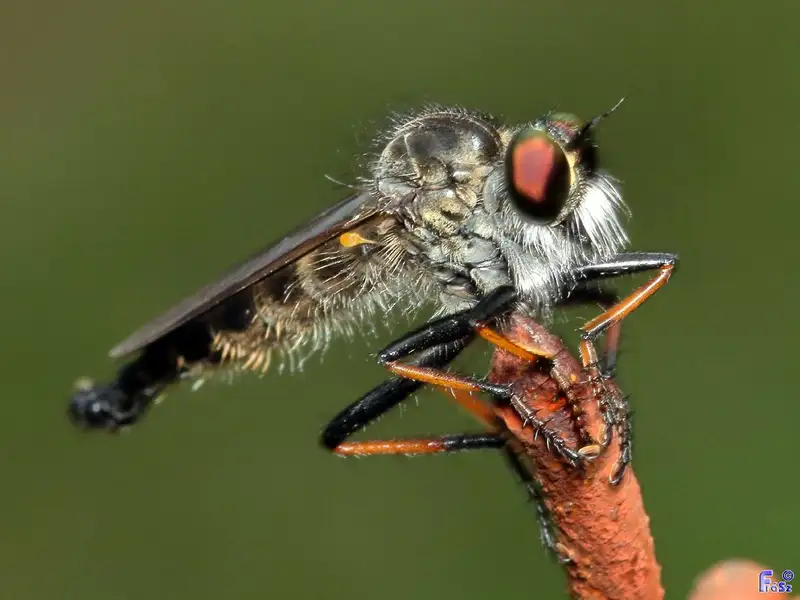
A new publication by Nimród Varga and Gábor Keresztes describes a previously unknown robber fly species in the genus Neoitamus.
The izeltlabuak.hu website primarily focuses on arthropods found in Hungary. This entry also deals with Hungarian fauna.
About the study
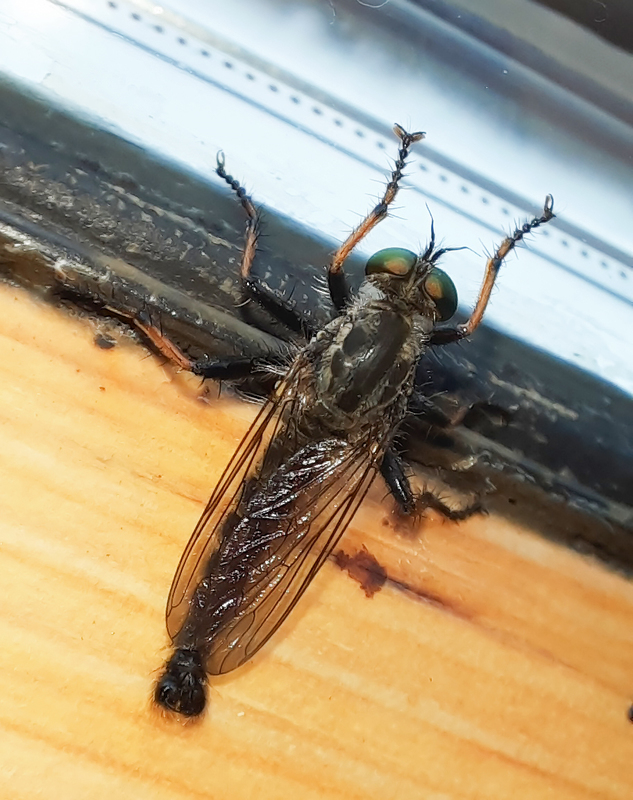
The recently published study describes a new species in the genus Neoitamus within the family Asilidae - robber flies, Neoitamus tothsandori sp. nov., and provides a revised identification key for European males with black femora and yellow tibiae.
Among the authors, Nimród Varga, who is also an active identifier on izeltlabuak.hu, first encountered this distinctive robber fly species at the age of 16, during a school excursion. The holotype specimen was later collected on June 8, 2024. The species was named in honor of the outstanding Hungarian dipterist and odonatologist (1930-2024).
The article reports two additional species newly recorded from Hungary: Neoitamus dasymallus and Neoitamus tumulus. Neoitamus tumulus was also reported for the first time from Albania and Montenegro. The article includes an updated checklist of Neoitamus species with black femora and yellow tibiae in the Hungarian species list.
The article features 24 illustrations, including drawings by Nimród Varga alongside photographs. According to the study, Neoitamus tothsandori sp. nov. is the most common Neoitamus species in Hungary. The species is currently known from Austria, Croatia, Czechia, Hungary, and Romania.
With this publication, to the best of our knowledge, Nimród Varga became, at the age of 19, the youngest researcher to discover a new species from the territory of Hungary.
Source
The article is available on ResearchGate and on the Animal Taxonomy and Ecology journal website
Affected species:
- order: Diptera
- family: Asilidae
- genus: Neoitamus
- species: Neoitamus cothurnatus
- order: Diptera
- family: Asilidae
- genus: Neoitamus
- species: Neoitamus cyanurus
- order: Diptera
- family: Asilidae
- genus: Neoitamus
- species: Neoitamus dasymallus
- order: Diptera
- family: Asilidae
- genus: Neoitamus
- species: Neoitamus socius
- order: Diptera
- family: Asilidae
- genus: Neoitamus
- species: Neoitamus tumulus
- order: Diptera
- family: Asilidae
- genus: Neoitamus
- species: Neoitamus tothsandori