User Observed Categories
The izeltlabuak.hu website primarily focuses on arthropods found in Hungary. This entry also deals with Hungarian fauna.
Overview
Similar to the taxonomic categories overview of domestic arthropods on the izeltlabuak.hu site, you can also overview a user's observed taxonomic categories.
On the page you can see:
- navigation to related pages
- settings that enable filtering and sorting of displayed observations
- the list of the user's observed taxa
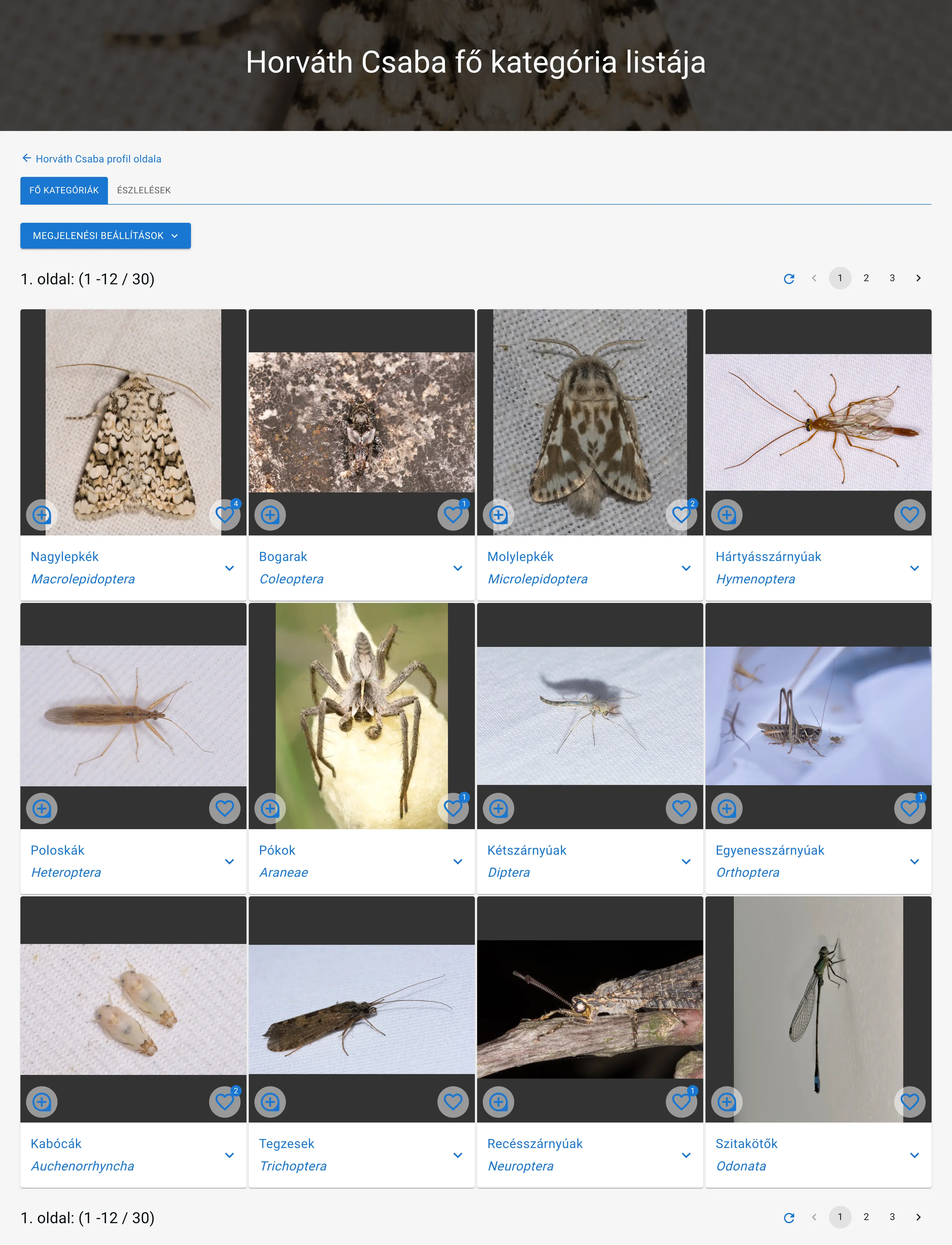 Example: Csaba Horváth's observed taxonomic categories
Availability
You can access a user's observed taxonomic categories in several ways:
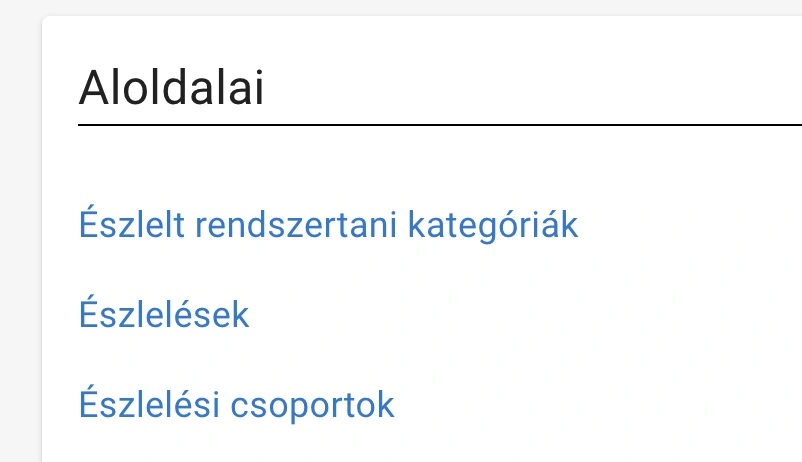
- From profile page: Your own or another user's recorded observations using the 'Observed Taxonomic Categories' link on the profile page
- From the user's observations list: using the tabs to navigate to the families, genera, species subpages under the given taxon.
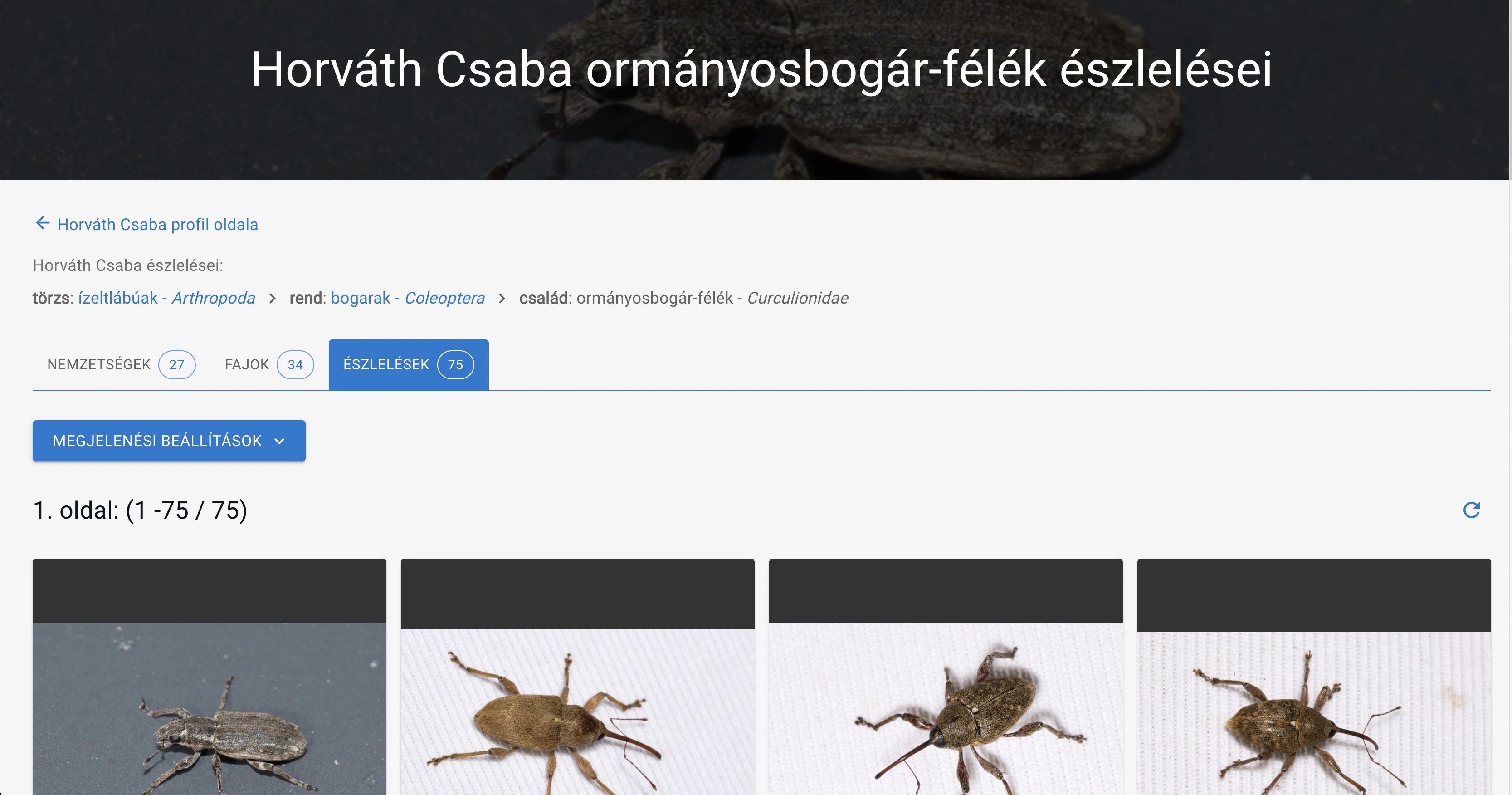 Example: tabs on Csaba Horváth's weevil observations page
Higher Categories
Higher categories represent taxonomic categories above the family level. For easier overview, we have highlighted the more commonly used taxa. Their ranks are mostly orders (beetles, flies, spiders, etc.), but can be suborders (true bugs, cicadas, ...), classes (centipedes, millipedes, ...), and a few other taxonomic categories. Butterflies have been grouped into the less scientifically used but generally known macro-moths and micro-moths groups.
Category Narrowing
By clicking on a list element's name, we reach the short summary page, data sheet that presents it. In addition, further tabs help with navigation. Besides the data sheet, these include pages like 'families', 'genera', 'species', 'observations', 'descriptions', 'identification keys' and 'discussion'.
Starting from a higher category, we can proceed to further subcategories at family, genus and species level using the 'families', 'genera', 'species' tabs. For example, from the beetles category, we can proceed to the families under it, or to the species list.
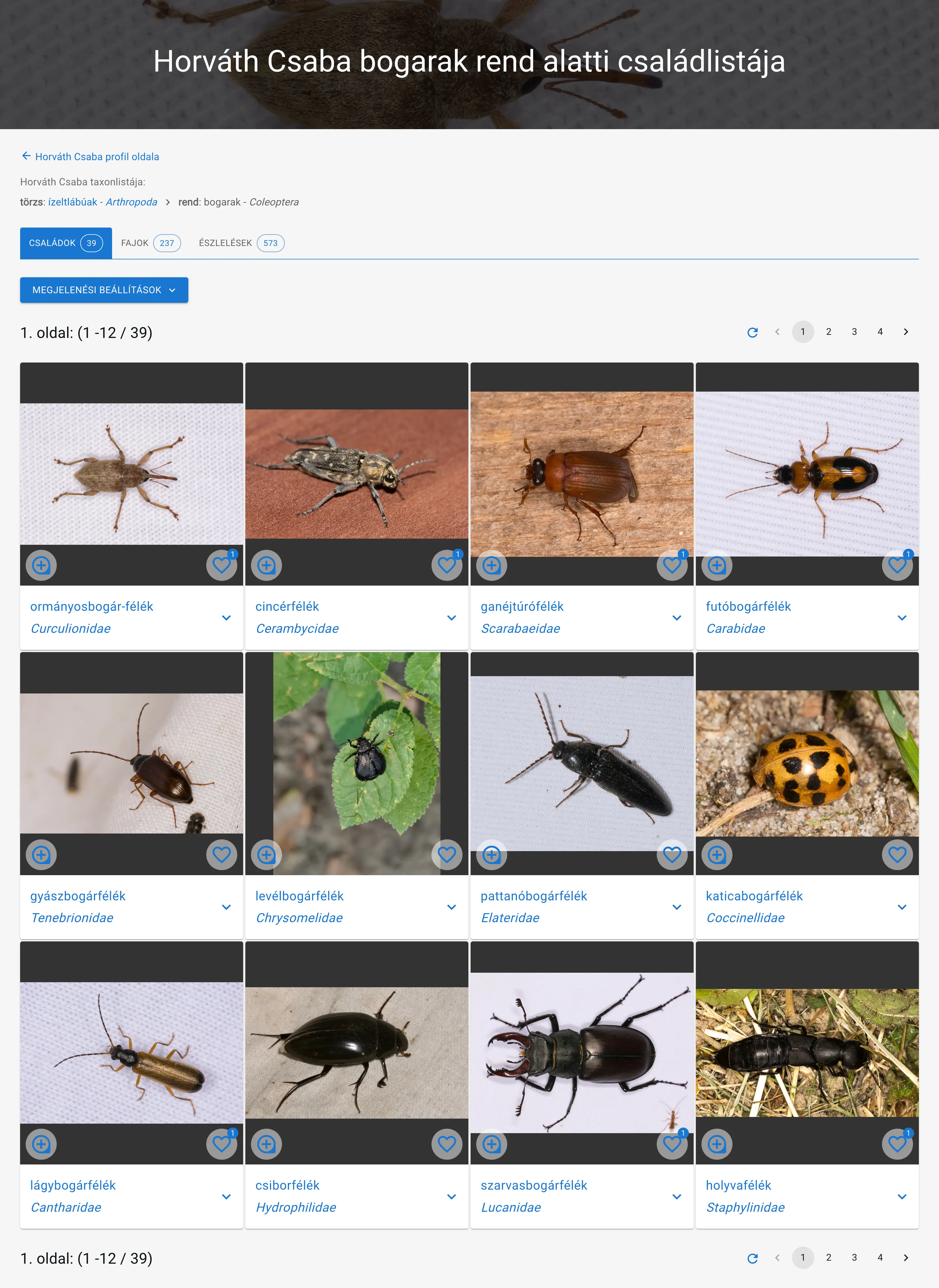 Example: Csaba Horváth's beetle families list
In the beetle families list, the first family will be weevils - Curculionidae. From here we can proceed to the genera under weevils, or to the species list.
 Example: Csaba Horváth's weevil family genera list
Among the weevil genera, the Curculio genus will be the first. From here we can proceed to the species list under the genus.
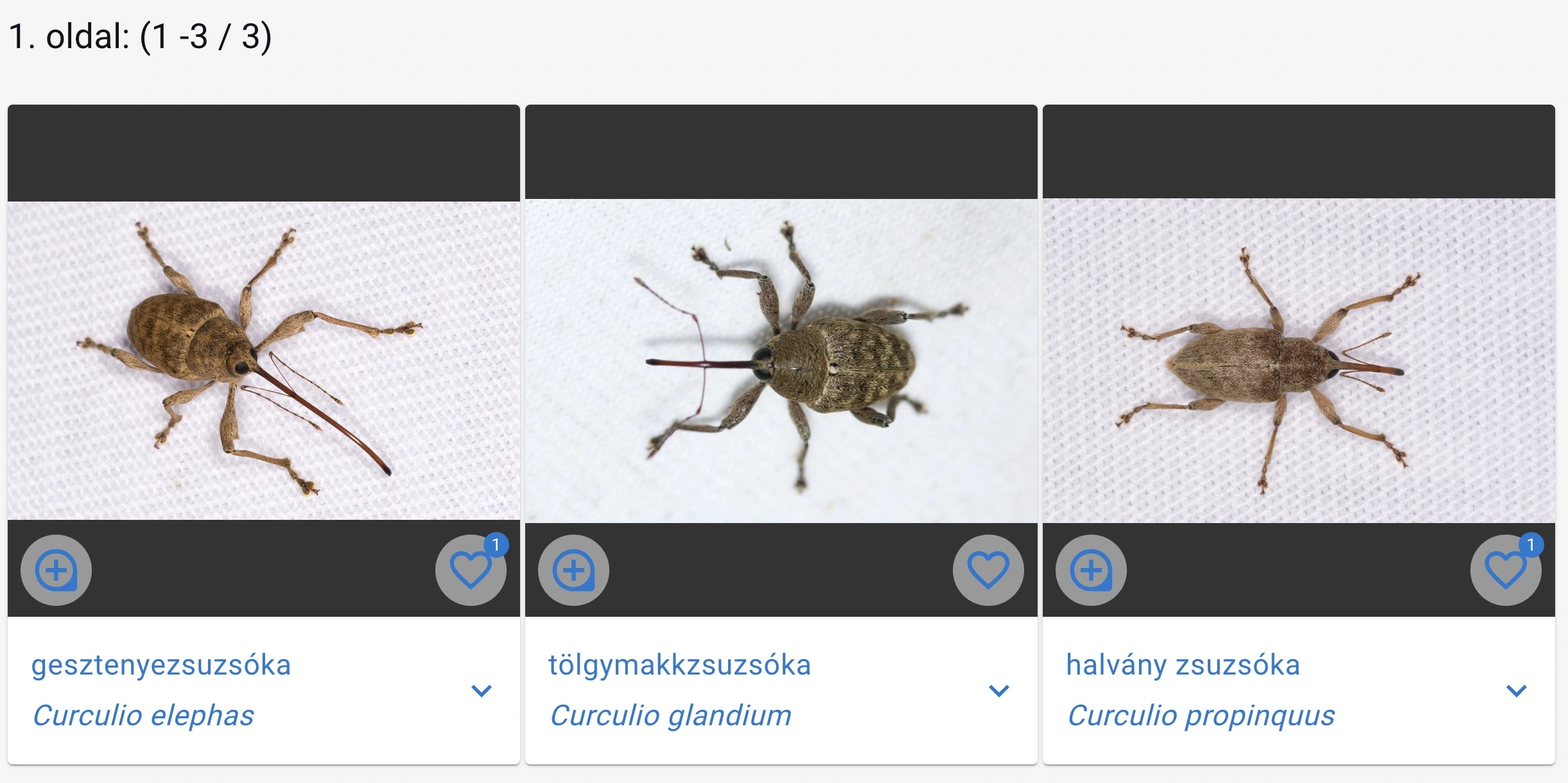 Example: Csaba Horváth's Curculio species list
Taxonomic List Elements
The lists (higher categories, families, genera, species) contain arthropod taxa observed by the user. Elements are included in the list based on identified observations. Suggested identifications are not counted in this.
Species Groups, Subspecies
We call species groups those groupings that we created because a specific species usually cannot be determined from an image, but can be narrowed down to two (species pair), rarely three species. Even if not to species level, the identification can thus be narrowed down to species pair instead of genus, and species groups also have their occurrence map where we can see their distribution. An example of a species pair is the common milkweed bug - Lygaeus equestris and false milkweed bug - Lygaeus simulans species created milkweed bug species pair.
For technical reasons, both species groups and subspecies count as species on the website. The consequence of this is that they are incorrectly included in the species count. In the case of subspecies, for example, in Carabus - ground beetles, they can distort the species count.
This known limitation is expected to be improved in the future.
Page Structure
Navigation
At the top of the page, we can proceed to
- the user's profile page
- the parent groups pages observed by the user
- subpages belonging to the user's given taxon using tabs
 Navigation between parent groups
Display Settings
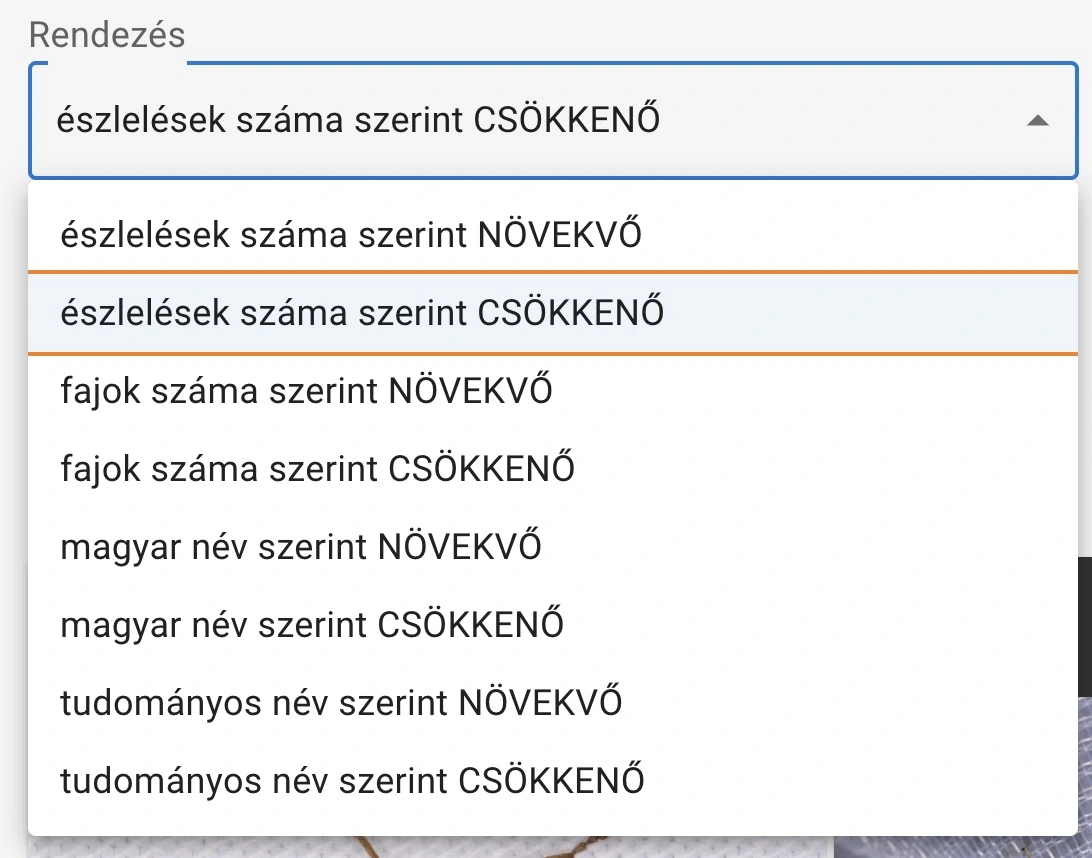
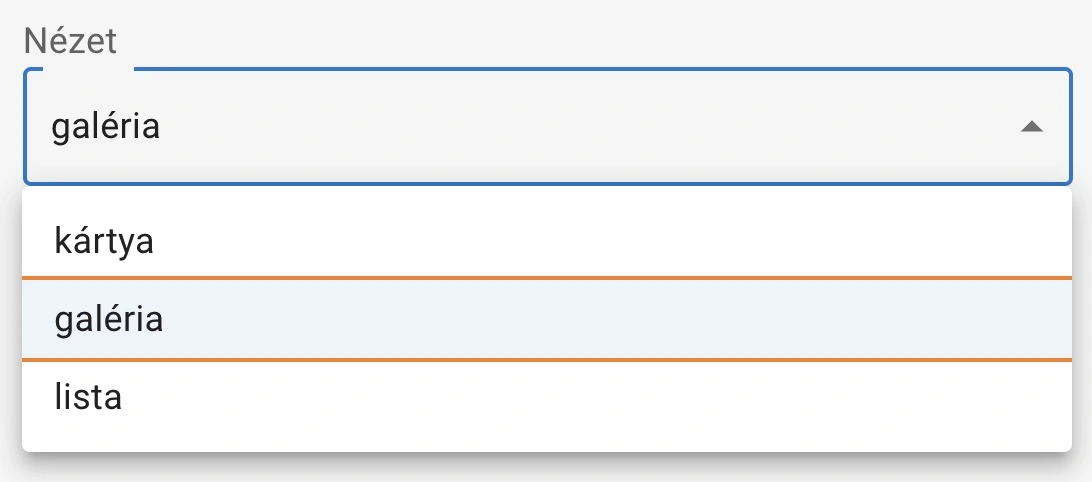
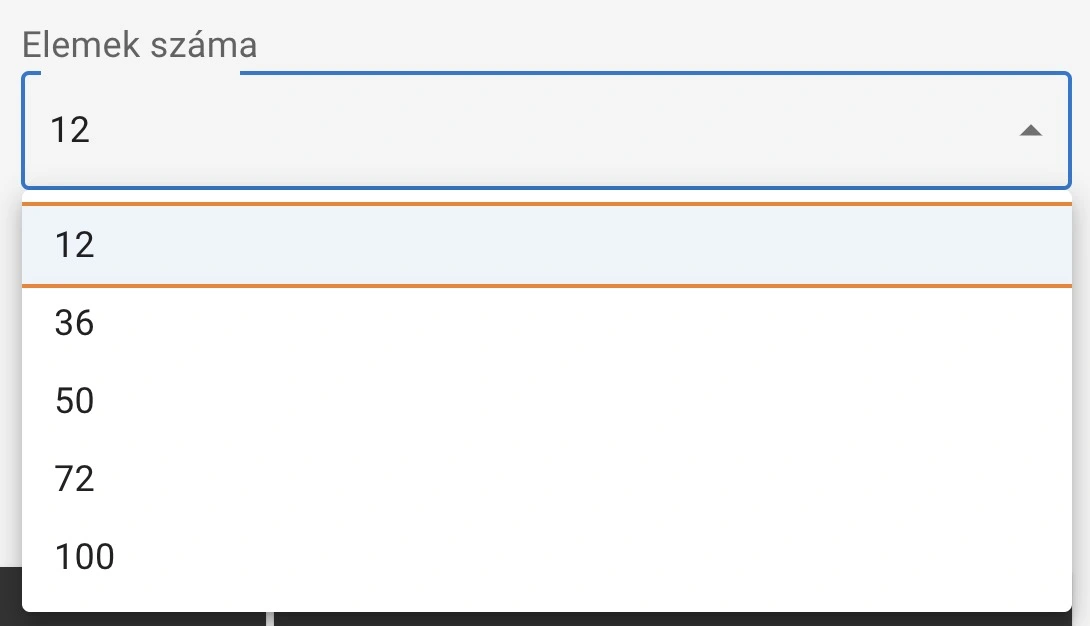
With display settings, you can customize how the list elements appear and filter them according to various criteria.
You can read more about display settings here.
 Display settings
You can use the following settings for sorting and filtering:
Observations List
The page contains a paginated list of the user's observed taxa.
In the observations list, each list element represents a taxon, for example a specific family, genus, or species. The list element contains the taxon's featured image, as well as the taxon's detailed data.
From here you can navigate to
- the narrower taxa observed by the user. E.g. to the user's species list under the Curculio genus.
- to all domestic narrower taxa. E.g. to the list of all domestic species under the Curculio genus.
- to the user's observations belonging to a given taxon. E.g. the user's Curculio observations
- to all observations belonging to a given taxon recorded on the website. E.g. all Curculio observations
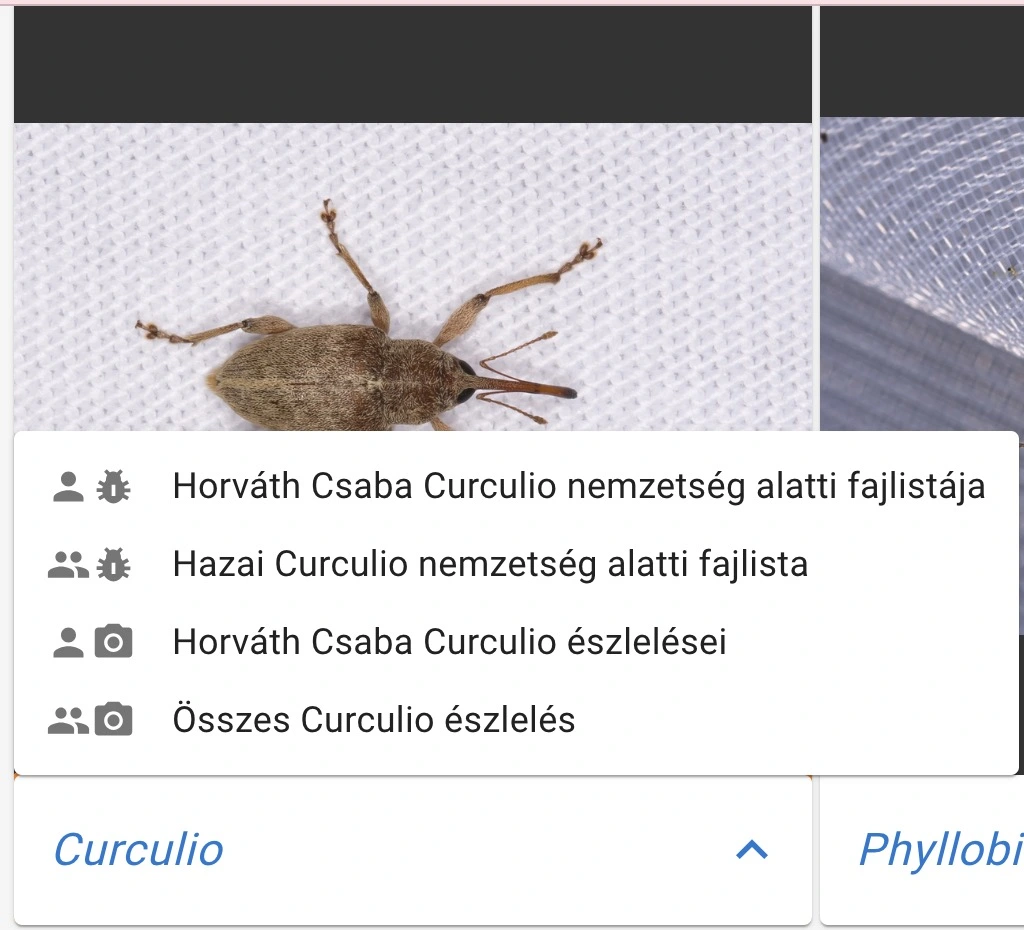 Example: One list element from Csaba Horváth's species list under the Curculio genus